
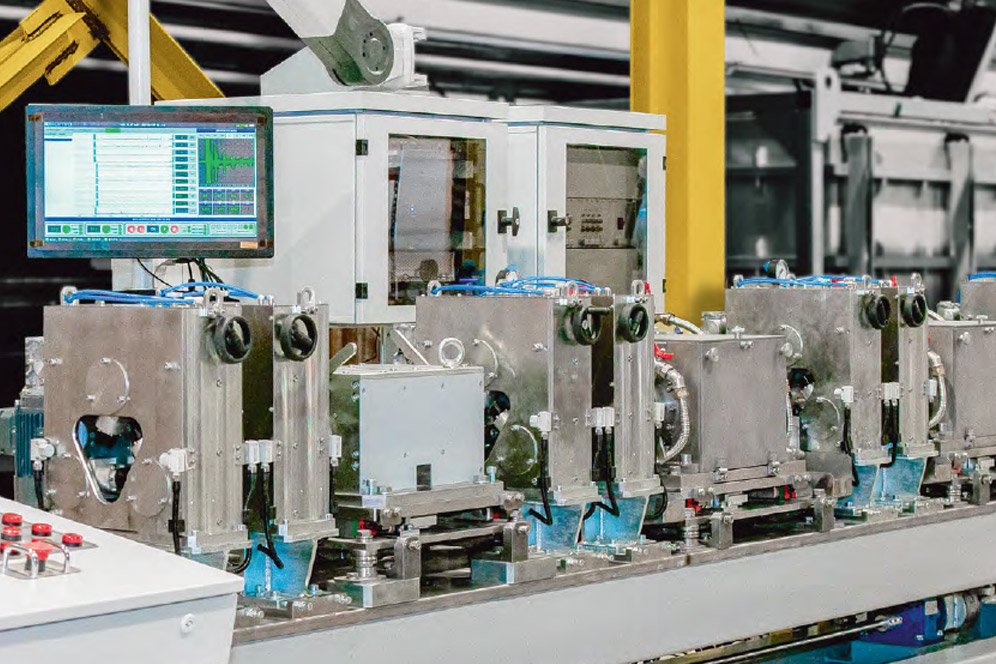

Automated UT System - Rotary Type
For Pipe and Bar Inspection
We manufacture the Automated UT System (Rotary Type) through our sister concern of Mayuresh Engineers.
High-speed ultrasonic testing (AUT) system designed for continuous industrial inspection.
Suitable for pipes and bars with diameters ranging from 4 mm to 180 mm.
UT Ultrasonic Testing
-
 Ultrasonic Testing (UT) is a non-destructive testing (NDT) method that uses high-frequency sound waves to
detect internal and surface defects in materials.
Ultrasonic Testing (UT) is a non-destructive testing (NDT) method that uses high-frequency sound waves to
detect internal and surface defects in materials.
Principle of UT
- A probe (transducer) sends ultrasonic sound waves into the material.
- Sound waves reflect from cracks, voids, inclusions, or the back wall.
- Reflected echoes return to the probe.
- Signals are displayed on the UT instrument screen.
UT Applications
- Weld inspection
- Forgings & castings
- Pressure vessels
- Pipes & plates
- Thickness measurement
Advantages of UT
- Detection of internal defects
- Deep penetration capability
- Immediate inspection results
- Accurate sizing of flaws
Major Users of UT
- Oil & Gas Industry
- Power Generation Industry
- Aerospace & Aviation
- Manufacturing & Fabrication
- Automotive Industry
- Construction & Infrastructure
- Railway, Marine & Defence
Application
-
The automated rotary type inspection system is designed for high-speed ultrasonic testing (AUT) of pipes
and bars made of various grades of steel with diameters from 4 mm to 180 mm.
System Components
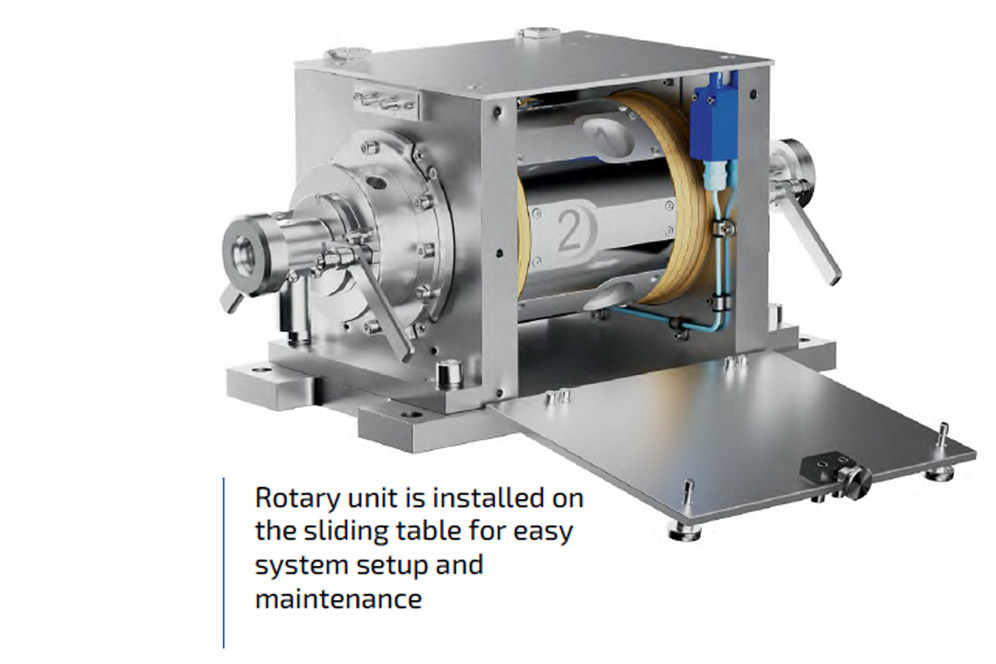
- Rotary unit with sliding table
- UT electronics
- Control systems
- Height-adjustable test bench
- Triple roll drives
- Water circulation system
- Flaw marking system
- Software
Inspection Objects
- Seamless and welded pipes
- Heat exchanger pipes
- Oil and gas pipes
- Boiler tubes
- Round billets
- Hot-rolled bars
- Finished bars
Inspection Scheme
-
In the rotary type AUT system, the unit with transducers rotates around the object being tested, while
the pipe or round bar moves through the unit.
-
This enables spiral scanning of the surface. The inspection is performed using the immersion method,
where water is supplied to the rotary unit during rotation.
Types of Defects
-
Pipe inspection: Longitudinal and transverse defects, laminations,
wall thickness measurement, outer and inner diameter measurement
-
Bar inspection: 100% cross-section inspection, surface defects,
internal structure defects, inclusions, longitudinal and transverse defects
Features
- Up to 16 positions for ultrasonic transducers in one rotary unit
- Possibility of installing a double set of rotary units in line to increase inspection speed
- Optional additional inspection methods: eddy current or magnetic induction
- Easy maintenance and setup with rotary units movable out of the line
- Durability: Contactless signal transmission ensures long-term operation
- Reliability: Synchronized with production speed and integrated into plant systems
- Informative inspection: Automatic defect marking and detailed test report for each pipe
Rotary Unit
-
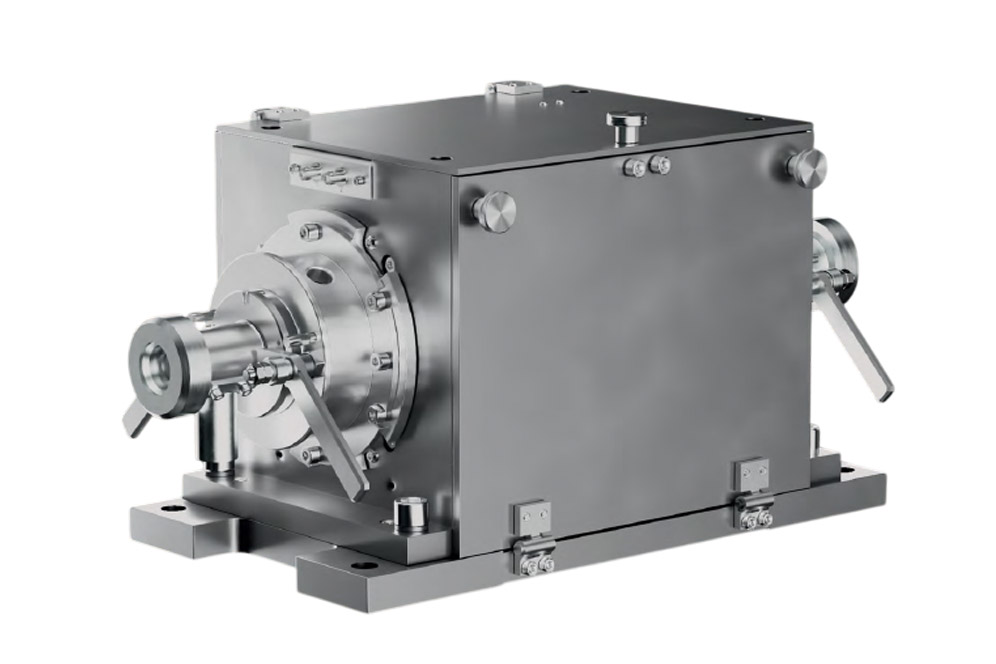
Each rotary unit contains up to 16 positions for transducers. Various transducer types can be installed
depending on test specifications, enabling flexible inspection configurations.
-
Contactless signal transmission ensures long-term operation, ease of maintenance at the customer site,
and excellent signal-to-noise ratio.
High-Speed Rotary AUT
Automated rotary ultrasonic testing system designed for high-speed inspection of pipes and bars with diameters ranging from 4 mm to 180 mm.
Multi-Defect Detection
Enables detection of longitudinal, transverse, surface, and internal defects with 100% coverage using rotary immersion ultrasonic inspection.
Reliable & Integrated System
Designed for continuous industrial operation with synchronized production speed, automated defect marking, and detailed inspection reporting.